



Partnerships Driving Technological Innovation in the Sakatti Project
17 December, 2025
Collaborative efforts between Anglo American and its partners are creating breakthroughs in technology, safety, and environmental performance. The Sakatti Project in northern Finland showcases how strategic partnerships can improve Health and Safety, decrease environmental impact and accelerate operational efficiency.
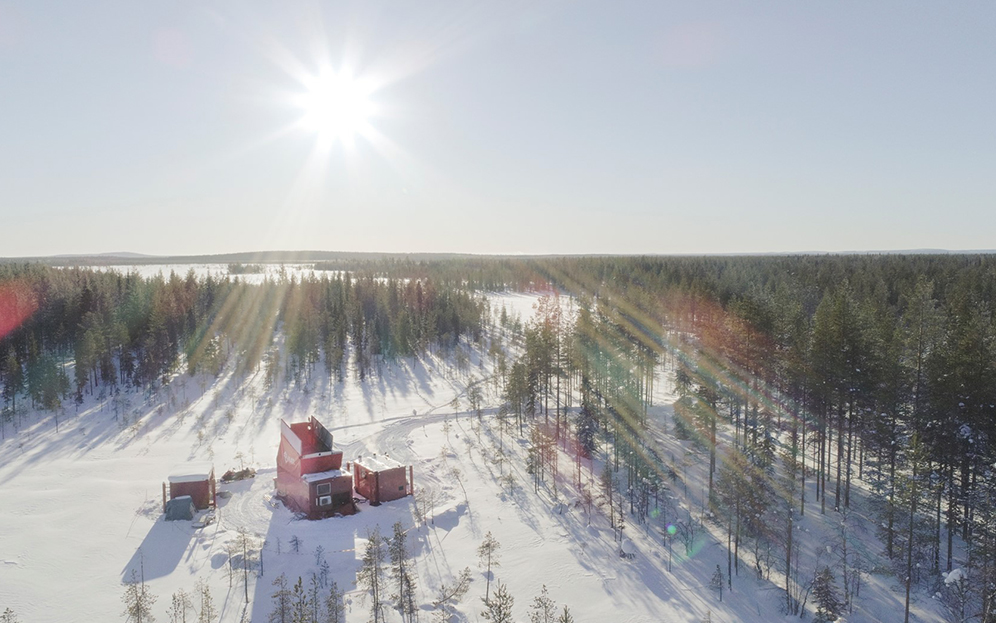
Drilling with Environmental Sensitivity
The Sakatti multimetallic deposit lies beneath the western edge of the Viiankiaapa Natura 2000 protected area. The ecological significance of the site presents unique challenges for bedrock drilling operations.
“Over the years, drilling has taken place both within and near the protected area, prompting the need to develop increasingly environmentally safe methods. We’ve succeeded thanks to a reliable network of partners and close collaboration,” says Tiia Kivisaari, Senior Geologist at the Sakatti Project.
Long-time drilling partner Oy KATI Ab has played a key role in adapting operations to sensitive environments over the years through drilling in Sakatti. Drilling can be done only during frozen and snow-covered conditions to minimize ecological impact.
“Mild winters with limited snowfall can shorten the drilling season significantly due to permit requirements for adequate snow cover. Artificial snow has proven to be an effective solution, enabling timely project start while protecting terrain and improving load-bearing capacity”, explains Ville Rautakoski, Drilling Manager at KATI.
Water circulation systems have also been optimized to avoid disrupting local hydrology. A closed-loop system - developed jointly with KATI nearly 15 years ago - is now widely adopted across the industry. It reduces water consumption and captures fine rock particles (‘drilling slurry’) generated during core drilling.
Drilling rigs have been engineered for quieter operation, reducing noise pollution, and improving working conditions.
Fieldwork Innovation and Environmental Stewardship
Palsatech Oy, a geoservices provider, has collaborated with Anglo American for years to enhance fieldwork practices with a focus on safety and environmental responsibility. Their joint efforts have led to new operational models for working in protected areas.
“Partnership has enabled both equipment and procedural development. The environmental impact of machines used in field work has been reduced, especially regarding routes leading to drilling sites. Also, we have been using artificial snow to prepare access routes and drilling sites, improving safety and minimizing environmental impact,” says Janne Siikaluoma, CEO of Palsatech.
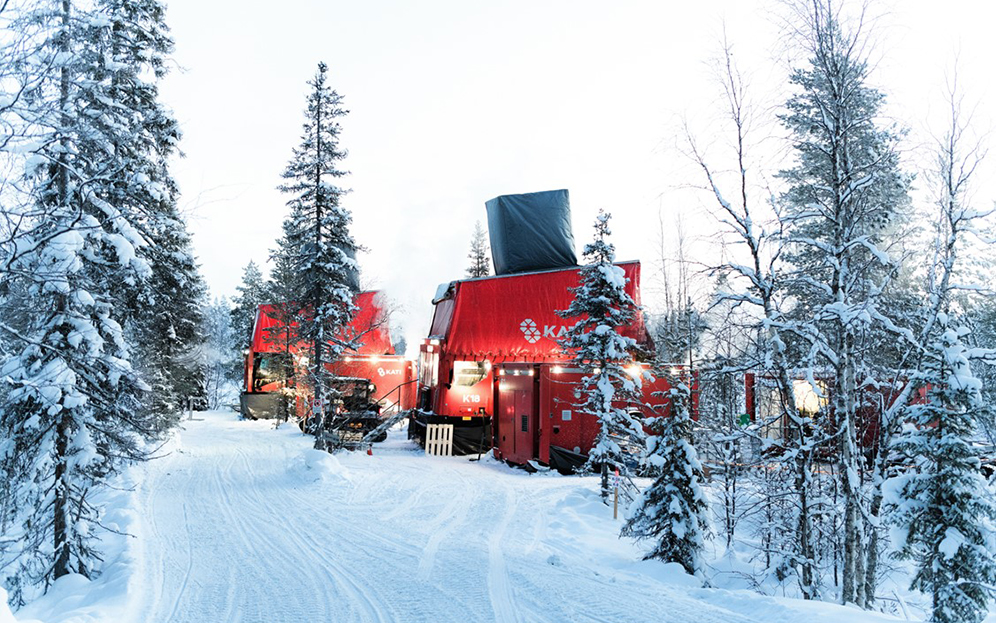
Both the drilling site and the route to the drilling machine have been strengthened with artificial snow.
Advanced Cementing Solutions
The cementing container needed to fill and seal drill holes has also been created through collaboration.
“The cementing equipment was discussed when the need arose to install VWP sensors (vibrating wire piezometers) for hydrological research. Efficient cementing equipment was needed because the sensors were installed in holes up to 1,000 meters deep, which would be filled with cement after the research was completed.”
“The existing cementing equipment was also not suitable for Arctic conditions or sensitive areas where no traces of cementing work should be left in nature,” Rautakoski says.
According to him, the success was made possible through the good cooperation of the expert network, where discussions about the goals and details of the work were first held with Anne Rautio, the senior hydrogeologist of the Sakatti Project.
Through the exchange of information, suitable equipment was co-designed and manufactured by KATI with full consideration of safety and environmental factors,” Rautakoski notes.
Ergonomic Logging Stations
Ore sample handling facilities have also seen significant improvements.
Electrically adjustable logging tables developed through customer collaboration enhance efficiency, ergonomics and safety in several work stages. Adjustable height and angle reduce physical strain and improve working ergonomics considerably, while integrated lighting and fixed photography stations support precise documentation.
“We also developed a dedicated photography station to improve image quality of core samples, which supports geological interpretation and modeling. The photography station produces high-quality photographs of drill core samples, which can be further used in geological interpretations and modeling”, Siikaluoma explains.
According to him, the development goals were achieved through the development of prototypes. The technical expertise of the people involved was a key factor. The feedback received during the hardware development served as a concrete motivator to continue the development work.
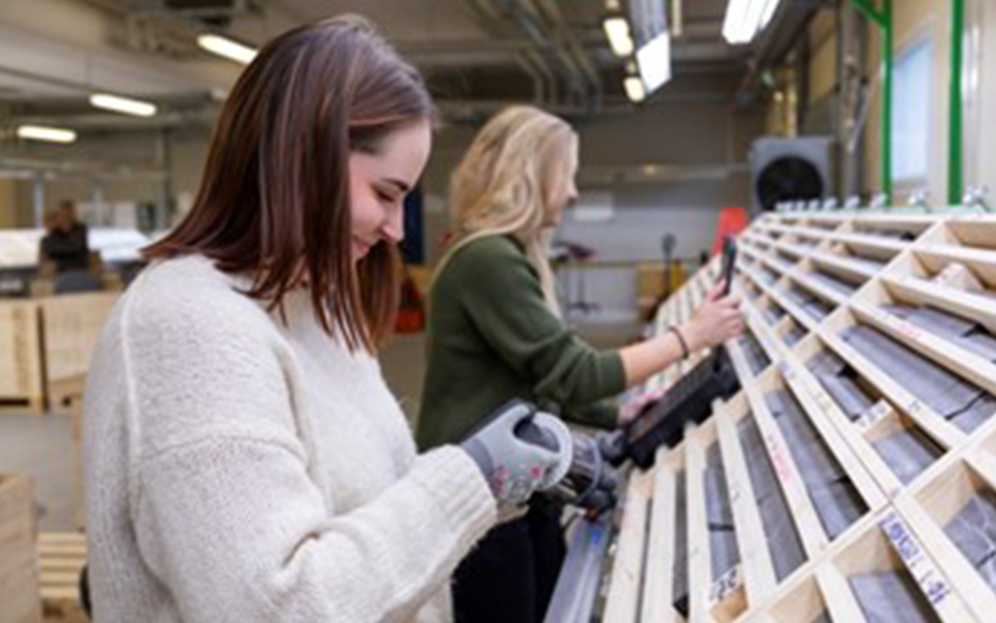
Logging tables improving safety and ergonomics have been developed through co-creation of Anglo American and its partner’s teams.
Shared Challenges, Shared Successes
Operating in environmentally sensitive areas has been a common challenge for all partners working at the Sakatti Project. Effective communication is essential to align expectations and practices, especially when partners are not accustomed to such demanding conditions.
“The challenge in the snowmaking project was to coordinate the operation of many different machines and work stages before the water pumped from the river could be routed to the work site. Permit conditions regarding noise, water extraction, and machinery movement had to be carefully managed,” Rautakoski recalls.
Successful collaboration hinges on well-organized teams and committed personnel. While permitting and impact assessments can delay implementation, feedback from regulators and stakeholders has been positive.
“The permitting process and impact assessment related to the implementation of the developed methods have taken time, which may have slowed down the implementation. However, the feedback received from the authorities granting mineral exploration permits and stakeholders was positive after the implementation of the new methods,” Siikaluoma says, highlighting the benefits of long-term work.
“Development efforts involved a wide range of experts from both organizations, ensuring safety, environmental integrity, technical functionality, and efficiency. Timelines and resources were clearly defined, and goals were ambitious yet achievable,” Siikaluoma emphasizes.
Close cooperation between the customer and the partner is ultimately always based on the capabilities of the experts working together. When a project has an open and solution-oriented operating culture, expertise also generates innovations.
“For us as a service provider, development cooperation has created methods for the preparation phase of mineral exploration field work, which our other customers have also adopted. This and the equipment development carried out in cooperation, especially with regard to logging tables, have created positive impact on our turnover, and the tables are currently sold globally,” Siikaluoma says.
In this way, the methods and technologies created through these partnerships not only support Anglo American’s goals but also enhance the capabilities of its partners to deliver responsible mining solutions to a broader market.
As the Sakatti Project progresses through permitting, and moves towards operations stage, further innovations are underway to mitigate construction and operational impacts in collaboration with various stakeholders.
The article was published in Vuorityö ja -tekniikka annual magazine 2025, Vuorityö ja -tekniikka is the annual member magazine of Vuoriteknikot ry (association), focusing on mining, quarrying, and rock engineering in Finland.