



Europe Recognises the Importance of Raw Material Security
23 September, 2026
Europe has long relied on imported raw materials, but growing geopolitical tensions have highlighted the risks of import dependency. Developing the high-grade Sakatti mineral deposit would support Finland’s and Europe’s self-sufficiency.
Demand for several critical minerals is growing rapidly due to trends such as electrification and the increasing use of artificial intelligence. These minerals include, in particular, copper, nickel and lithium, as well as rare earth elements.
The rapid growth in mineral demand alone poses a significant challenge for Europe, which remains highly dependent on imports for raw materials.
According to the OECD, the EU consumes 15–20% of all minerals produced globally. However, EU countries account for only 3–4% of global mineral production¹.
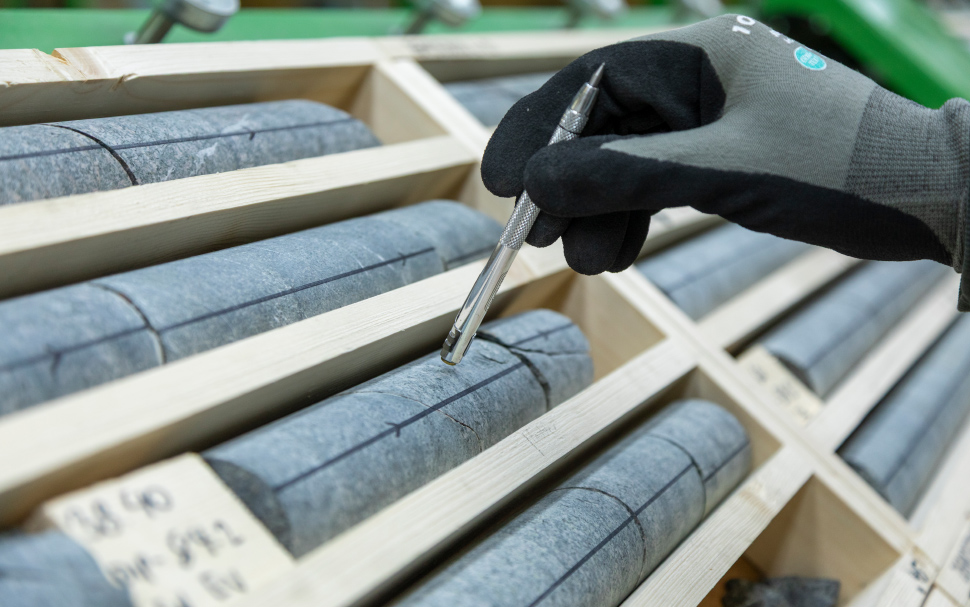
The Sakatti deposit is not exceptionally large, but it is exceptionally rich. Its high mineral concentrations enable entirely underground mining and, consequently, a relatively small environmental footprint. Of the metals contained in the deposit, copper and nickel in particular are classified as critical raw materials, needed by both Finland and the EU.
Once production begins in the early 2030s, the Sakatti mine would double Finland’s copper production and increase nickel production by one quarter. The mine would also support the development of the mineral value chain across the country and contribute to creating greater added value.
Concentrated Production and Geopolitical Tensions May Disrupt Access to Raw Materials
Import dependency becomes particularly risky because the production of many raw materials is concentrated in a limited number of countries. For example, 63% of the cobalt used in vehicle batteries originates from the Democratic Republic of the Congo, while 60% is refined in China. Similarly, 97% of the magnesium used within the EU is imported from China.
In recent years, trade disputes and armed conflicts have also affected the availability and pricing of raw materials, with consequences for areas such as Europe’s energy transition and the security of supply in the defence sector.
The EU Has Recognised the Challenge
The European Commission’s Critical Raw Materials Act (CRMA) was introduced in response to concerns over the availability of raw materials. The legislation aims to reduce import dependency and ensure secure and sustainable supplies of critical raw materials for European industry.
In addition to increasing production, the European Commission encourages EU Member States to strengthen domestic processing, recycling and innovation².
A Major Opportunity for Finland
Improving access to raw materials and strengthening security of supply also presents opportunities for Finland, whose bedrock contains an exceptionally wide range of mineral resources. Finland is either the only producer in Europe or by far the largest producer of five metals: chromium, cobalt, platinum, palladium and nickel³. In addition, Finland has highly diversified expertise in both industry and academia, and mineral production is subject to strict regulatory oversight.
Finland can further strengthen its domestic mineral production and processing capacity, as there is demand for the country’s raw materials, expertise, responsible production methods and stable operating environment.
Sources:
1 OECD (2019), Global Material Resources Outlook to 2060: Economic Drivers and Environmental Consequences
2 European Critical Raw Materials Act 2023
3 World Mining Data 2025 (Federal Ministry, Republic of Austria / World Mining Congress)