.
Close
About Sakatti
Read more
Latest annual report
Mega Nav Image
Latest annual report
Mega Nav Image
The Difference Makers
Mega Nav Image
The Difference Makers
Mega Nav Image
$name
Mega Nav Image
A world-class portfolio
Mega Nav Image
Sustainability
Read more
Q3 2018 PRODUCTION REPORT
Mega Nav Image
How to become a supplier
Mega Nav Image
Main Content
Gradient background image

The Mining Project Progresses in Line with the Permitting Processes

As it progresses, the Sakatti Project requires a number of permits from different authorities. Completing the permitting processes takes several years. Permits are not merely administrative procedures; their purpose is to examine the project's impacts in a comprehensive manner and to ensure, among other things, that environmental and land-use considerations are fully integrated into project planning.

The permitting processes include consultation and hearing phases, which provide our various stakeholders with opportunities to influence the progress of the project. The permitting authority often requests statements from experts and other authorities. Local residents, authorities, organisations, landowners, and other interested parties, in turn, are able to participate in and influence the project's progress, for example through public hearings.

At Anglo American, transparency and cooperation are core values. Our aim is to ensure that all perspectives are taken into account in our project planning and that decision-making is based on comprehensive and transparent information. Through open communication, we seek to build trust and to reconcile mining operations, environmental protection, regional development, and societal needs together with other stakeholders.

SEO Purpose H2 tag hidden

Key Permitting Processes

The most important permitting processes for the Sakatti Project relate to mineral exploration and mining, environmental and water matters, land-use planning, and construction. The order of the permitting phases may vary to some extent over the course of the project, and the processes often overlap with one another.

Learn more about the ongoing and upcoming permitting processes by clicking the + button below:

Question mark Accordion icon white Mineral Exploration Permits Icon Plus

Mineral exploration often begins with a reservation notification, which gives the applicant a priority right to apply for a mineral exploration permit for the reserved area. Mineral exploration may also be conducted without a reservation, either as prospecting work or through obtaining permission.

Prospecting work refers to geological observations, minor sampling (using a geological hammer or by collecting loose stones), visual observations, or other limited investigations that do not cause damage or significant disturbance.

Mineral exploration that goes beyond prospecting work may be carried out with the consent of the landowner, under a mineral exploration permit, or under a mining permit.

To apply for a mineral exploration permit, the company must identify restrictions on land use in the area (including zoning status and proximity to possible protected areas) and assess the environmental impacts of the activities on the environment and nature conservation, surface waters and groundwater, as well as on people and livelihoods. The applicant must be familiar with the specific characteristics of the area, including the locations of protected species. The application must demonstrate the company's capability to carry out mineral exploration, present a plan for how the exploration will be conducted, and assess the impacts of the exploration activities in the area.

In Finland, a company may carry out mineral exploration in a single permit area for a maximum of 15 years, provided that after the tenth year a majority of the landowners in the area consent to the continuation of mineral exploration. A permit is initially granted for up to four years, after which extensions may be granted in several stages, provided that exploration progresses and the permit conditions continue to be met.

More information on applying for a mineral exploration permit is available on the Tukes website.

Mineral Exploration in the Sakatti Project

Anglo American began mineral exploration in Lapland in 2004, and the Sakatti ore deposit was discovered in 2009. For some of the mineral exploration permit areas associated with the Sakatti Project, including the Sakatti permit area itself, the validity of the mineral exploration permit has already expired. Further investigation of the Sakatti deposit continues once the mining permit has entered into force.

The company's mineral exploration activities continue in the Sodankylä area, with the aim of gaining a better overall understanding of the region's mineral potential. In mineral exploration, as in all our fieldwork, we operate within valid permit areas or with the consent of landowners and inform relevant stakeholders in advance about planned field activities.

The impacts of mineral exploration related to the Sakatti mining project are described in the Natura assessment updated in 2025 and in the statements issued in connection with it. During the winter season 2025-2026, mineral exploration drilling was carried out outside the protected area in the vicinity of Viiankiaavantie, Mataraojantie, and Postovaarantie. After the winter drilling season, exploration will continue using geophysical methods.

Information on completed and planned mineral exploration activities is shared, as usual, in our end-of-season and start-of-season events as well as through our Facebook publications.

Opportunities for Participation

The Finnish Safety and Chemicals Agency (Tukes), which acts as the mining authority, processes mineral exploration permit applications in accordance with the Mining Act.

Before a mineral exploration permit is granted, a public notice is issued, during with stakeholders, such as landowners, have the opportunity to submit their views on the application. A granted mineral exploration permit may be appealed in writing to the permitting authority if the permit decision is considered incorrect. In such cases, the appeal is handled by the Administrative Court.

Appeals may be lodged not only by affected parties, but also by registered associations or foundations whose purpose is to promote environmental, health, or nature conversation, or the quality of the living environment, and whose statutory area of activity is likely to be affected by the environmental impacts of the proposed mineral exploration. The Municipality of Sodankylä, the Licensing and Supervisory Authority (LVV), and other authorities responsible for safeguarding the public interest within their respective fields may also appeal the decision.

In addition, the mining authority itself may appeal a decision by the Administrative Court if the court has amended or annulled the authority's original decision.

Question mark Accordion icon white Environmental Impact Assessment (EIA) Icon Plus

The purpose of the Environmental Impact Assessment (EIA) procedure is to identify and evaluate the environmental impacts of a mining project. During EIA procedure, authorities consult with other authorities as well as with all parties who may be affected by the project.
As part of the EIA procedure, the project developer submits an EIA programme to the coordinating authority, i.e. the Licensing and Supervisory Authority (until 31 December 2026, the ELY Centre). The EIA programme describes the project and its implementation alternatives, the impacts to be assessed, and how the environmental impact assessment will be carried out. Once the impacts of the project and its alternatives described in the programme have been assessed, the project developer compiles the findings into an EIA report. The report takes into account the statement issued by the coordinating authority, which addresses the scope and level of detail of the programme and includes a summary of comments received from other stakeholders (e.g. residents and organisations).

The purpose of the EIA procedure is to assess the significant direct and indirect effects of the project on the environment, human health, living conditions, amenity, communities, and the interactions between these factors. Several implementation alternatives and their impactsare examined during the EIA procedure.

The adequacy and quality of the EIA report are reviewed when the coordinating authority assesses the report and issues a reasoned conclusion on the project's significant environmental impacts. The project developer needs both the EIA report and the reasoned conclusion for the project's permit applications.

More information on the EIA procedure is available on the Environmental Administration's website

EIA Procedure in the Sakatti Project

The EIA procedure for the Sakatti mining project was launched with the EIA programme in 2018. The procedure was concluded in 2023, when the coordinating authority issued its reasoned conclusion on the EIA report (EIA report supplement) in August 2023.

You can review the EIA materials via the links below:

Participation in the EIA Procedure

Stakeholders have been able to influence the Sakatti EIA procedure at three different stages. Public meetings were organised and opportunities to submit opinions and written statements were announced through public notices when the EIA programme was available for review in 2018, when the EIA report was available for review at the turn of 2020-2021, and for the third time when the supplement to the EIA report was available for review in 2023.

Question mark Accordion icon white Natura Assessment Icon Plus

Under the Nature Conservation Act, a Natura assessment must be carried out if it can be reasonably anticipated that a project or plan is likely to have significant adverse effects on the conservation objectives of a Natura site, i.e. on the habitat types and species for which the area has been designated as part of the Natura 2000 network.
Read more about the Natura 2000 network and Natura assessment on the Environmental Administration's website

Natura Assessment of the Sakatti Project

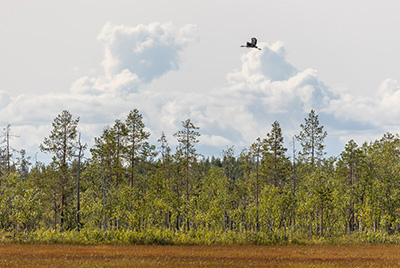
The Sakatti mineral deposit is located partly beneath the Viiankiaava Natura 2000 protected area, which is why a Natura assessment has also been prepared as part of the project's Environmental Impact Assessment (EIA) procedure.

The Natura assessment prepared in connection with the EIA procedure, in accordance with Section 65 of the former Nature Conservation Act, was completed in 2020, and its supplement in 2023. In August 2023, the Lapland ELY Centre issued its reasoned conclusion on the Sakatti Project's EIA report and its statement under the Nature Conservation Act regarding the supplement to the Natura assessment. According to the reasoned conclusion, the EIA report had been prepared in compliance with the law; however, in its statement the ELY Centre required that the Natura assessment be updated at the next stage of the project.

The update of the Natura assessment for the Sakatti Project was completed in February 2025, and the Natura assessment process was concluded in August 2025, when the ELY Centre and Metsähallitus had issued their statements on the Natura assessment. According to these statements, the Natura assessment has been prepared in an acceptable manner and therefore enables the continuation of the project's permitting processes.

The updated Natura assessment found that, despite mitigation measures, the mining project could weaken three habitat types that form the basis for protection (aapa mire, calcareous fen, and forested mire) as well as the habitats of two protected plant species (Paludella squarrosa and Ranunculus lapponicus) on the north-western edge of the Viiankiaava area. The risk of change is limited to the western side of the Natura area. Significant adverse effects could arise from possible changes in the hydrology of the mire, meaning that impacts on the most hydrologically sensitive mire environments and species cannot be ruled out.

In its statement, the ELY Centre adopted a more precautionary position than the experts involved in the Natura assessment and selected the more conservative scenario presented in the assessment. On this basis, the ELY Centre concluded that the environmental impacts of the planned mining project extend over a wider area and affect a greater number of habitat types (in addition: transitional mires and shore mires, small rivers and streams, springs and spring mires) and species (in addition: the mosses Hamatocaulis vernicosus and Fissidens osmundoides, and the bird species jack snipe and spotted redshank) than the assessment experts had estimated. Metsähallitus reached a broadly similar conclusion; however, in its statement it also included one additional habitat type on the western edge of the mire (humic lakes and ponds) within the scope of the project's impacts.

The ELY Centre states in its opinion that the assessment work has been prepared appropriately and, after the supplements made during the statement process, is sufficient for the purposes of Natura assessment. The groundwater modelling used in the Natura assessment has been prepared in accordance with the precautionary principle, and both the modelling and the studies underlying it are exceptionally extensive and detailed, with modelling uncertainties described at a sufficient level. Metsähallitus, representing the landowner, likewise considers the Natura assessment to be exceptional in scope, clear, and unambiguous in its presentation of the assessments.

The Sakatti Project requires a Natura derogation permit for the purposes of the phased regional land-use plan. In accordance with the Nature Conservation Act, the Government of Finland may grant a Natura derogation permit when the project is justified by an imperative reason of overriding public interest and no alternative means of implementing the project exists.

The updated Natura assessment for the Sakatti Project, together with its appendices and statements, is available on the website here:

Natura assessment for the Sakatti Project

A background article on the Natura assessment we have carried out is available at the link below:

Article: Natura assessment

Participation in the Natura Assessment

Under the Nature Conservation Act, opinions on the Natura assessment must be requested during the permitting process from the Licensing and Supervisory Authority (until 31 December 2025, the ELY Centre) as well as from the owners or managers of the Natura area.

The landowner consultation included in the Natura assessment for the Sakatti mining project began when the updated Natura assessment was submitted to the Regional Council of Lapland in March 2025 for the preparation of the phased regional land-use plan for the Sakatti Project. The Regional Council of Lapland submitted requests for statements to the Lapland ELY Centre, Metsähallitus, and those landowners who own land within the Natura area. The time allowed for submitting statements was six months, and the Natura assessment process was concluded once the statements were received in August 2025.

The adequacy of the Natura assessment may be revisited in connection with other permitting decisions, for example in the context of possible appeals.

Question mark Accordion icon white Land-Use Planning and Zoning Icon Plus

Mining operations are generally based on a land use plan prepared in accordance with the Land-Use and Building Act.

The Act also allows for mining activities where land use has otherwise been sufficiently assessed in cooperation with the municipality, the Regional Council, and the Licensing and Supervisory Authority.

Land-Use Planning for the Sakatti Project

The draft phased regional land-use for the Sakatti Project, prepared by Regional Council of Lapland, was subject to consultation with authorities in early 2026 (until 31 January 2026) The Regional Council of Lapland will make the final draft publicly available for review in March-April 2026. After the public review period, the application for aa Natura derogation permit will be submitted to the Government of Finland for approval. Following the Government's consideration of the Natura of the derogation permit, the land-use plan proposal will proceed to approval by the Board and the Council of the Regional Council of Lapland.

The objective of the phased regional land-use plan is to reconcile the land-use needs of the Sakatti Project with, among other things, residential areas, infrastructure, environmental and nature conservation values, landscape, reindeer husbandry, and other livelihoods in the project area.

More information on the ongoing phased regional land-use planning for the Sakatti Project is available on the Regional Council of Lapland's website. The Participation and Assessment Scheme for the planning process can also be accessed on the Council's website.

Land-use solutions will be further specified at a later stage through municipal land-use planning, when local land-use issues are resolved in local and detailed plans (master plans and local detailed plans). At that stage, matters such as the routing of transport connections, the locations of utility corridors, and solutions related to nature, landscape, and the built cultural environment will be further defined.

Opportunities for Participation

The Regional Council of Lapland gathers feedback from authorities and stakeholders at different stages of the planning process. Stakeholders include all those whose living conditions or interests may be affected by the plan, such as residents and landowners.

The first opportunity to provide feedback was at the initiation of the planning process, when the planning project was announced and the Participation and Assessment Scheme was made publicly available.

The Regional Council of Lapland made the preparatory material for the Sakatti phased regional land-use plan publicly available for review and comments on 1 September 2025, and a public meeting on the draft plan was held at the Sodankylä municipal office on 11 September 2025.

Stakeholders have a second opportunity to provide feedback during the preparation phase of the plan, at which point it is also possible to submit a formal objection to the draft plan. During this phase, the Regional Council of Lapland also requests statements from the ELY Centre, municipalities, key authorities and organisations, as well as the relevant ministries.

Finally, the plan proposal will be made publicly available for review, during which time stakeholders may again submit formal objections.

The plan proposal will be publicly available once more in spring 2026, when stakeholders may submit objections to the proposal.

Participation in land-use planning is also possible through information and discussion events organised during the process. Informal feedback may be submitted throughout the entire planning process.

Question mark Accordion icon white Mining Permit Icon Plus

The establishment and operation of a mine require a mining permit granted by the Finnish Safety and Chemicals Agency (Tukes). A mining permit grants the right to utilise the mining minerals within the mining area, surplus rock generated as a by-product, tailings, and other rock and soil materials belonging to the mining area insofar as their use is necessary for mining operations. In addition, the permit authorises mineral exploration within the mining area.

The granting of a mining permit requires that the deposit is economically viable in terms of its size, grade, and technical characteristics. The relationship between the mining area, the project area, and other land use must also be clarified, and the project must be sufficiently planned in terms of land-use zoning. The permit holder is required to report annually on its operations to the authority.

Tukes sets a mining security for the mining permit holder to ensure that, once mining operations have ceased, the area can be restored to a condition that meets general safety requirements.

More information about mining permits is available on the Tukes website: https://tukes.fi/en/mining .

Mining Permit for the Sakatti Project

Anglo American submitted a mining permit application to Tukes in 2024. The public notification of the mining permit application is still pending the progress of the Natura process.

Once the mining permit has been granted, the National Land Survey of Finland will carry out a mining procedure (kaivostoimitus) to establish the rights of use for the mining area. During this procedure, compensation payable to entitled parties is determined, and landowners and other rights holders are heard.

Opportunities for Participation

Once Tukes, acting as the mining authority, has determined that the permit application submitted by the mining company meets the requirements of the Mining Act and the Mining Decree, it announces the receipt of the application on its public notice board (https://tukes.fi/asiointi/paatokset-ja-kuulutukset) and on the notice boards on the municipalities concerned.Notification may also be made through a newspaper announcement. Interested parties, such as landowners, are informed of the permit application. If there are more than 30 landowners, notification may also be carried out through a newspaper notice.

Before a permit decision is made, the permitting authority provides landowners, the municipality, and other authorities with an opportunity to submit objections to the permit application. The necessary statements are requested from the above-mentioned parties, and all interested parties also have the right to submit objections concerning the application.

The applicant and other interested parties are given an opportunity to provide explanations regarding any requirements or information presented in statements or objections that may affect the decision. Interested parties are also given the opportunity to submit counterstatements if such explanations may influence the outcome of the matter.

A permit decision issued by the mining authority may be appealed to the Administrative Court. Appeals may be lodged not only by interested parties, but also by registered associations or foundations whose purpose is to promote environmental protection, health protection, nature conservation, or the quality of the living environment, provided that the environmental impacts of the planned mine occur within their statutory area of operation. The municipality, the Licensing and Supervisory Authority (LVV), and other authorities responsible for safeguarding the public interest within their respective fields may also appeal the decision.

In addition, the mining authority itself may appeal a decision in which the Administrative Court has amended or overturned its original decision.

Question mark Accordion icon white Mining Safety Permit Icon Plus

A mining company must ensure the structural and technical safety of the mine as well as the prevention of hazardous situations and accidents. The mining safety permit defines the safety principles to be applied at the mine, how safety matters are organised, and the plans related to the start-up and closure of operations.
As part of the permitting procedure, the mining authority (Tukes, the Finnish Safety and Chemicals Agency) requests statements from the occupational safety and health authority, the local rescue authority, the Radiation and Nuclear Safety Authority (STUK), and, where necessary, other authorities responsible for safeguarding the public interest within their respective fields.

The mining authority also carries out periodic inspections of mines. Occupational safety at mines is supervised by the occupational safety and health divisions of the Regional State Administrative Agencies.

More information about the mining safety permit is available on the Tukes website: https://tukes.fi/en/mining-ore-prospecting-and-gold-panning/mining-safety-permit .

Safety Permits for the Sakatti Project

Mine safety planning is progressing as part of the overall Sakatti Project mine planning and other technical design work.

Opportunities for Participation

The mining safety permit procedure does not include statutory public hearings or consultation rounds. However, acting as the mining authority, Tukes may, where necessary, organise hearings related to chemical safety and the storage of explosives.

Question mark Accordion icon white Power Line Permitting Icon Plus
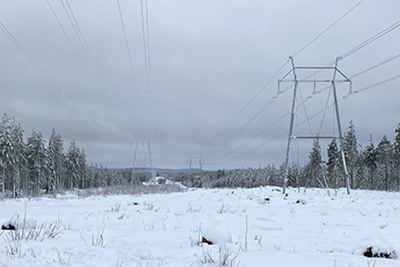
Picture: Omexom 2025

In the Sakatti Project, the plan is to construct a new approximately 25-kilometre-long 110 kV connection line from the Kuusivaara mine site to the Vajukoski substation.

The National Land Survey of Finland has granted the Sakatti Project a research permit for field studies related to the power line route. These studies began in early 2026 and are expected to be completed during 2026. The research permit authorises the company to carry out field surveys related to the power line, such as measurements, soil investigations, and terrain surveys for determining the alignment of the power line. The research permit does not allow land acquisition or construction.

The environmental impacts of the power line have been assessed as part of the project's Environmental Impact Assessment (EIA) procedure. The power line has also been taken into account in the phased regional land-use plan for the Sakatti mining project.

The construction of the power line also requires a project permit granted by the Energy Authority, which ensures that the construction of the line is necessary for the transmission of electricity.

In addition, the construction of the power line requires a statement from the national transmission system operator Fingrid, which owns some 110 kV connections in areas that are important for the operation of the national grid. Otherwise, 110 kV power lines are mainly owned by regional distribution network companies. Because the 110 kV electricity network operates at the interface between the national grid and local distribution networks, ownership varies by region.

Once the field studies have been completed, the company will apply to the Government of Finland for an expropriation permit to acquire the right of use for the areas required by the power line. The expropriation permit allows the acquisition of a right of use for the power poweline corridor, and the area can no longer be used for forestry. Landowners are compensated for the loss of use rights.

The expropriation permit is implemented through an expropriation procedure carried out by an expropriation committee appointed by the National Land Survey of Finland. In the procedure, a restriction on property use is established for the power line corridor, enabling the construction, operation, and maintenance of the line.

Construction of the power line may begin at the earliest in late 2027 and is expected to take approximately one year.

Opportunities for Participation

A public notice concerning the power line field studies (4 December 2025) was delivered by letter to known affected landowners and published as a newspaper notice. The notice was available on the Municipality of Sodankylä's website between 10 December 2025 and 31 January 2026.

An information meeting related to the power line project was organised for landowners in the power line area in December 2025.

Question mark Accordion icon white Environmental Permits Icon Plus

A mining project requires an environmental permit issued by the environmental authority for mining operations and the processing of ore or minerals.
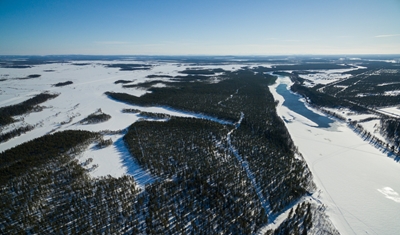
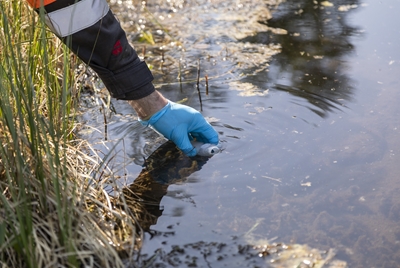
In the environmental permit, the permitting authority sets the necessary conditions concerning, among other things, emission limit values, and measures for the prevention and reduction of emissions, as well as the prevention of soil and groundwater contamination and the reduction of the quantity and harmfulness of waste. In addition, the environmental permit lays down requirements for actions to be taken in various disturbance and exceptional situations, as well as measures to be implemented after the cessation of operations (including site rehabilitation).

When issuing permit conditions, the environmental authority must take into account the nature of the activity, the characteristics of the area, the environmental impacts of the activity, the importance of measures aimed at preventing environmental pollution, and the technical and economic feasibility of implementing such measures.

Under the Water Act, a project also requires a water permit issued by the permitting authority if it may cause harmful changes to water bodies, shorelines, or, for example, groundwater conditions. The application for a water permit is processed concurrently with the environmental permit application.

Compliance with environmental permits for mines is supervised by the Licensing and Supervisory Authority (LVV) and the municipal environmental protection authority.

More information on the environmental permitting process is available on the Licensing and Supervisory Authority's website.

Environmental and Water Permits for the Sakatti Project

The environmental permit application for the Sakatti Project is planned to be submitted to the Licensing and Supervisory Authority after the processing of the Natura derogation permit application.

Opportunities for Participation

Before submitting the environmental permit application, the company will organise a public meeting at which the project subject to permitting will be presented. During this event, comments and opinions will be received, listened to,and any concerns raised will be taken seriously.

The permitting authority will announce the receipt of the environmental and water permit application through a public notice, after which authorities will submit their statements on the application. Interested parties, meaning persons whose rights or interests may be affected by the matter, may submit objections to the pending application. Persons other than interested parties have the right to express their views on the application.

Following the submission of statements and objections, a permit decision is issued. The decision may be appealed to the Vaasa Administrative Court, and subsequently to the Supreme Administrative Court, if leave to appeal is granted.

Documents related to the application can be reviewed in the Licensing and Supervisory Authority's information service for water and environmental permits, where they are available for at least 30 days following the publication of the public notice.

Question mark Accordion icon white Building Permit Icon Plus

When a project progresses to the construction phase, a building permit and a landscape work permit are applied for from the municipal building authority. These permits define the technical and structural requirements under which the mine may be constructed. Building permits for a mine are closely linked to other permits, in particular land-use planning as well as mining and environmental permits.

The building permit specifies, among other things, the location, intended use, and structural safety of the buildings to be constructed. Permit conditions also influence the technical implementation of the mine, such as underground access routes, ventilation, lighting, and shelters. The building permit application presents the methods of construction, materials to be used, and the necessary technical systems.

Building Permit for the Sakatti Mine

Construction of the Sakatti mine is planned to begin towards the end of the 2020s. The construction phase will last several years.

Opportunities for Participation

The applicant for a building permit is required to consult neighboring parties, meaning the owners and occupiers of adjacent and opposite properties. These consultations may be carried out by the applicant or, for a fee, the municipality may be requested to organise the consultation.

Add note content here