



Mine Planning Progresses in Stages
16 April, 2026
The planning process for the Sakatti mine is built on studies aimed at improving the understanding of the project. At present, the project is in the pre-feasibility B stage, during which planning is refined by, among other things, ensuring that the ore deposit can be mined safely and efficiently.
“In the currently ongoing Phase B of the pre-feasibility study, as well as later during the feasibility study, we work closely with the environmental and permitting team to ensure that environmental issues are taken into account as thoroughly as possible and that adverse impacts can be minimized,” says Neels van Niekerk, Head of Technical Planning for the Sakatti Project. Van Niekerk moved to Finland from South Africa with his family last summer and now leads the technical planning department at Anglo American’s Oulu office.
During the Concept phase and Phase A of the pre-feasibility study, potential project implementation options were already defined at an early stage, and their technical and economic feasibility was assessed.
“When the required permitting processes have been completed and the feasibility study is finalized, a final investment decision on project implementation can be made,” van Niekerk explains.
Over the past year, Sakatti’s technical team has grown. At present, however, the majority of planning work is carried out with the support of consultants. The experienced consultants working on the project specialize in mine development, including TBM tunneling (Tunnel Boring Machine) and other areas of technical design.
As a result of a competitive tendering process launched at the end of 2024, the engineering and consulting company AFRY was selected as the partner for the pre-engineering phase.
The current study phase is scheduled for completion during the current year. The actual feasibility study is planned to be conducted during 2027–2028.
“I am very much looking forward to the completion of the final feasibility study. At that stage, we will know in detail what we are building and how the mine’s operational activities are planned. Final financing decisions will also be made then, turning the project plan into an implementation-ready whole,” van Niekerk says.
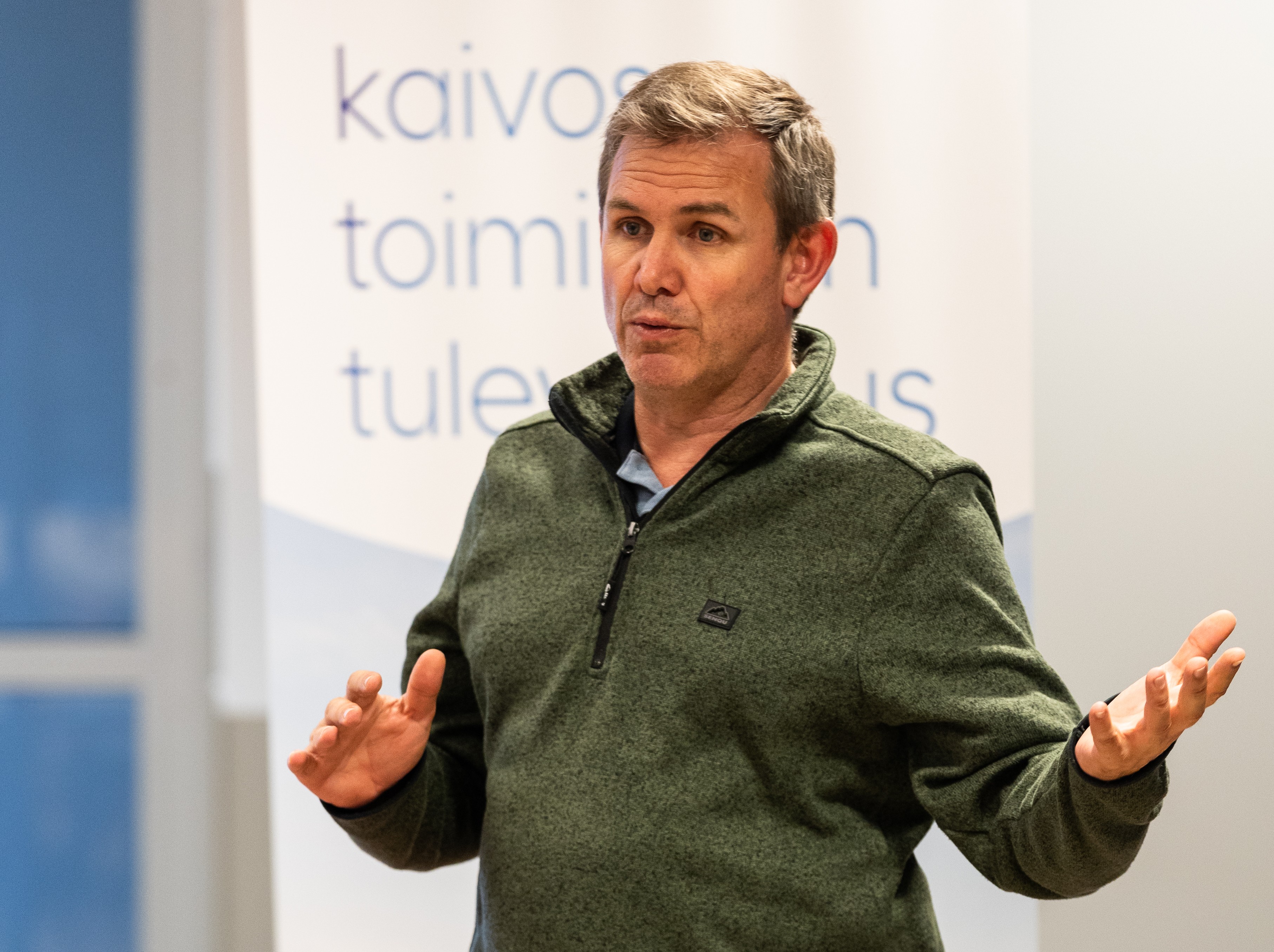
Neels van Niekerk speaking about the project’s pre-engineering phase at Sakatti’s open doors event in 2025.
Regional Phased Land Use Plan for the Sakatti Project Nearing Completion
The regional phased land use plan related to the Sakatti Project has been made publicly available for review.
The regional land use plan guides land use at the regional level and, as its name suggests, focuses on a limited entity—in this case, the Sakatti mining project area.
The draft plan has been made available for landowners and other stakeholders to review. The Regional Council of Lapland, which prepared the plan, is also requesting statements from authorities and municipalities and will gather feedback and objections submitted on the draft plan.
Once the draft has been processed and any necessary clarifications made, the Regional Council of Lapland will apply to the Finnish Government for a decision on a Natura derogation. Before approving the phased regional land use plan, the Council’s board must request a decision from the Government on whether the plan may be implemented for imperative reasons of overriding public interest in a situation where no alternatives exist.
At the same time, the Government will also decide on the measures required to compensate for any adverse impacts on the coherence or natural values of the Natura 2000 network.
Land Use Planning Process of the Sakatti Project
- 2020 The phased regional land use plan for the Sakatti mining project was initiated, and the participation and assessment plan (PAP/OAS) was made available. The plan has since been updated.
- 2020 The Environmental Impact Assessment (EIA) was completed.
- 2023 A supplement to the EIA was completed.
- 2025 An update to the Natura assessment was completed.
- 2025 The preparatory materials for the phased regional land use plan were available for review in September–October. The draft was approved by the Lapland Regional Council’s board in December to be sent for authority statements.
- 2026 The proposal for the phased regional land use plan is publicly available until 24 April 2026. A public information meeting regarding the proposal was held on 31 March 2026.
Next Steps:
- The Regional Council of Lapland will compile feedback submitted on the draft plan and assess whether changes are needed.
- The Council will apply to the Finnish Government for a Natura derogation decision to enable approval of the phased regional land use plan.
- The decision will be followed by an appeal period and processing of potential appeals.
- Once the plan enters into force, municipal master and detailed zoning will determine traffic arrangements, the locations of power lines and support structures, water management solutions, and additional measures to safeguard conservation values.
Nature Impacts to Be Compensated Through Offset Measures
The Sakatti Project is currently finalizing a plan to compensate for impacts on the Viiankiaapa mire. Authorities will assess the plan as part of the processing of the phased regional land use plan and the Natura derogation permit.
The potential impacts of mining operations on the designated conservation values of Viiankiaapa were defined in the Natura assessment. Despite mitigation measures, not all environmental impacts at the western edge of the Natura area could be ruled out.
The Sakatti Project is therefore preparing a plan to compensate for the potential impacts on Viiankiaapa. Compensatory measures refer to actions that offset the possible deterioration of the designated conservation values of Viiankiaapa. The general compensation plan is based on the Natura assessment updated by the company in 2025, as well as on authority statements.
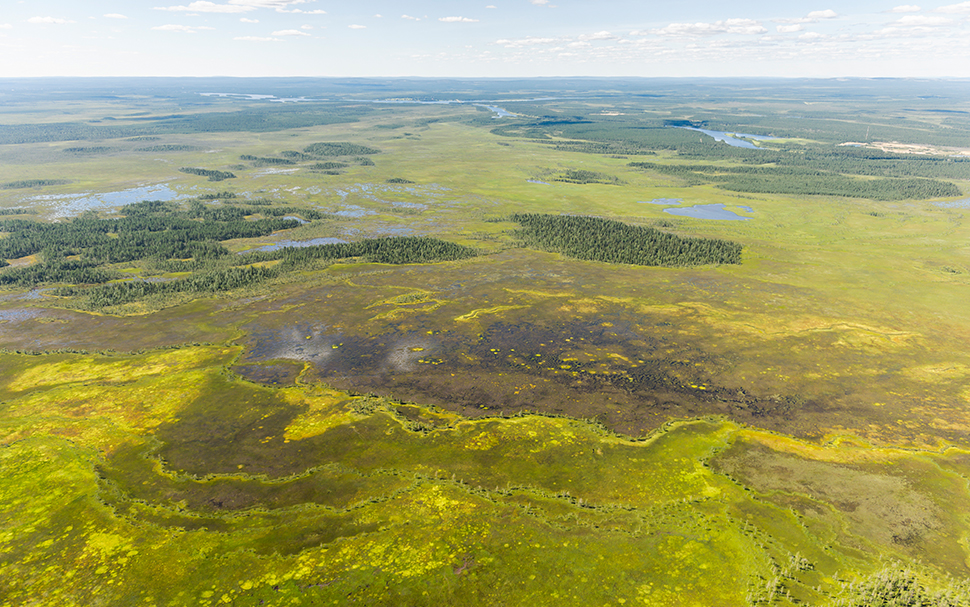
Aapa mire is one of the habitat types that form the conservation basis of the Viiankiaapa Natura area.
At the national level, methods for measuring environmental impacts and offsets have been developed in the context of voluntary ecological compensation. In Finland, this work has been advanced by researchers from the Finnish Environment Institute (SYKE) and the Universities of Helsinki and Jyväskylä.
The joint BOOST project has developed tools to define biodiversity value hectares and to assess how much natural value is generated through various restoration measures.
“We have utilized the calculation methods developed in the BOOST project in the general plan for compensatory measures in the Viiankiaapa Natura area when calculating the impacts caused by the mining project,” says Anne Valkama, Environmental Manager of the Sakatti Project.
“The calculation methods were originally intended for voluntary compensation, but we have also applied them, where appropriate, to Natura compensation.”
A report outlining the principles for planning compensatory measures for Viiankiaapa has been included in the most recent authority consultation for the explanatory report of the phased regional land use plan, held in December–January.
Habitat Hectare Measures Environmental Impacts and Benefits
The unit used to calculate impacts and benefits is the habitat hectare, a biodiversity measurement unit that combines habitat quality and area into a single figure, enabling comparison between impacts and benefits.
The natural value of a one-hectare area—and consequently its biodiversity value hectares—is higher the closer the area is to its natural state. Biodiversity value hectares are calculated for the impact area both in the baseline situation (before construction of the mining project) and based on assessed impacts when mining effects are at their maximum. The difference determines the number of biodiversity value hectares that must be produced through compensatory measures.
Offsets Planned Based on Calculations
The Sakatti Project’s compensation plan will include offset areas and measures, as well as calculations ensuring their full adequacy.
“We have identified offset areas where we will carry out restoration measures. These actions will be planned, and the benefits obtained from restoration will be calculated using formulas—for example, by assessing, in line with the BOOST method, how much nature value something like blocking ditches in drained wetlands restores or generates in a specific area,” explains Anne Valkama.
The principles guiding compensatory planning have already established that offset areas must form large, continuous entities. Unified areas strengthen biodiversity holistically and support not only conservation grounds but also the vitality of other species and habitat types.
Compensatory measures are being considered for six habitat types and four plant species. In addition, potential impacts on the territories of two bird species are taken into account.
In Finland, the implementation of compensation plans for Natura-area environmental impacts is supervised by the Finnish Licensing and Supervision Authority (LVV).
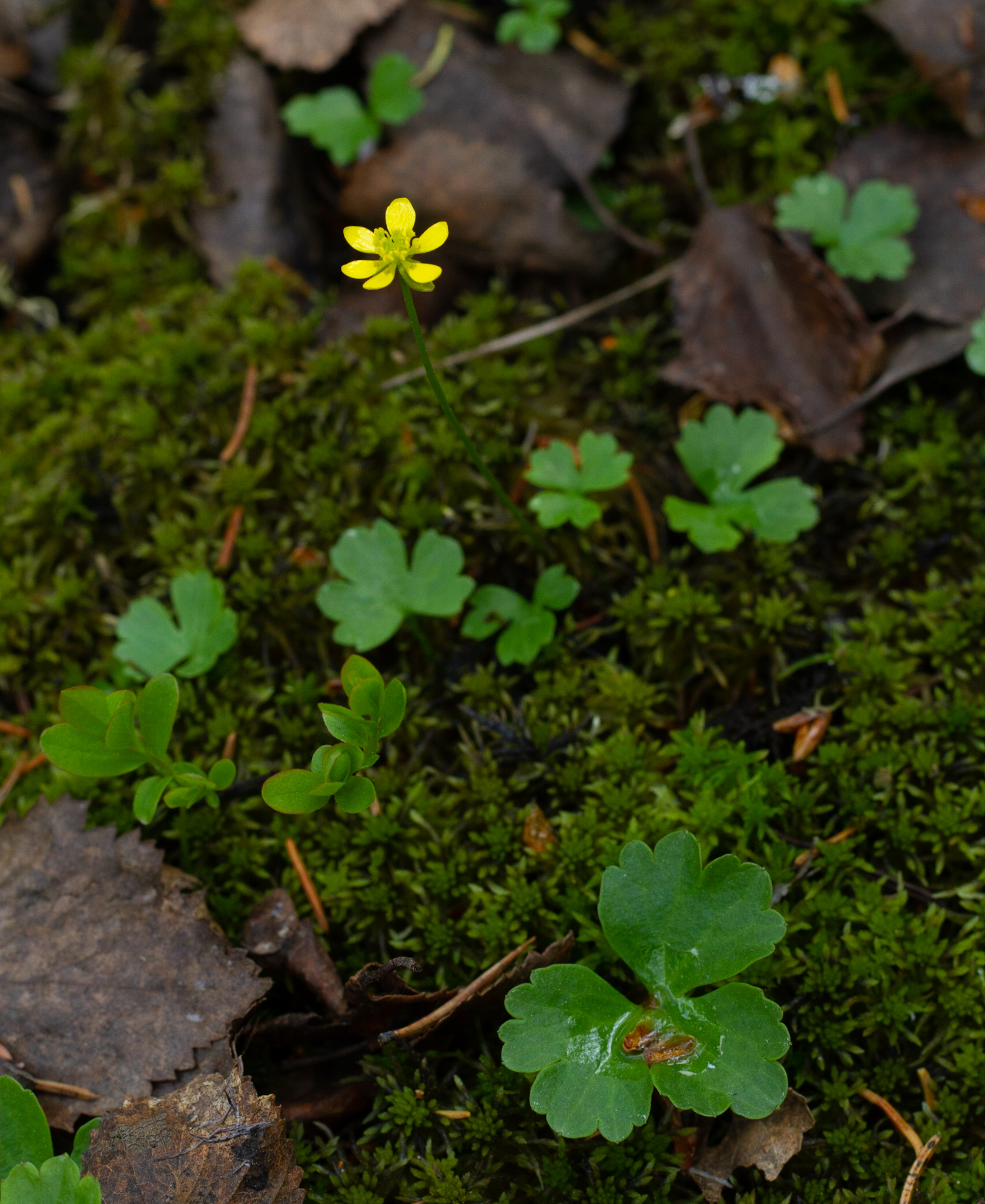
Lapland buttercup. Photo: Osmo Heikkala
Mandatory and Voluntary Compensation of Natural Values
The permitting processes for the mining project include the mandatory compensation measures described above. The plan currently being finalized to compensate for impacts on Viiankiaapa is required as part of the Natura derogation, which is decided by the Finnish Government.
Procedures for voluntary ecological compensation and detailed criteria for offsets are regulated by the Nature Conservation Act. The Sakatti mining project plans to continue its voluntary ecological compensation efforts by restoring and protecting mire areas in Sodankylä.
A previous voluntary compensation project, the Sakatti forest compensation, was carried out in 2022 by acquiring and protecting nearly 3,000 hectares of old-growth forest in Inari. The area compensates for the reduction of commercial forest caused by the mine outside protected areas and remains Finland’s largest voluntary ecological compensation to date.
At the corporate level, Anglo American’s principle is to overcompensate for environmental impacts through voluntary measures across all its projects and operating mines.

Environmental Manager Anne Valkama is currently working on a plan to compensate for the conservation grounds of the Viiankiaapa Natura 2000 area.
Announcements about our upcoming information events will be shared as usual on our website’s news section and via social media (in Finnish). Please follow our communications.
@AngloAmericanFI
@Finland - Anglo American