



Minimising Impacts on Nature: Reducing the Environmental Footprint Through Extensive Modelling and Technological Solutions
17 June, 2026
Metals can only be mined where they occur naturally. Since mining operations cannot be relocated, a key aspect of project planning is minimising adverse impacts.
The Sakatti Project aims to set a benchmark for responsible mining. This means applying the four-step mitigation hierarchy. The primary objective is to avoid environmental impacts by selecting the implementation alternative that has the least effect on the surrounding natural environment.
Impacts that cannot be avoided are mitigated through various measures, including technical solutions. If environmental impacts cannot be completely avoided and mining activities still affect the environment despite mitigation measures, the affected areas will be restored after operations cease, returning them as close as possible to their natural state.
As a final measure, compensation measures may be implemented to enhance biodiversity elsewhere.
Leaving the North-Eastern Mineralisation Unmined Is the Most Important Measure for Reducing Environmental Impacts
The most significant reduction in the environmental impacts of the Sakatti Project stems from an early project planning decision not to exploit a separate mineralisation located northeast of the main deposit. Mining this satellite deposit would have had a significant impact on groundwater levels in the areas above it.
As a result of not developing the satellite deposit, the mine’s water management impacts are expected to affect, at their maximum extent, only four per cent of the Natura area. The impacts within that area are expected to be mostly minor.
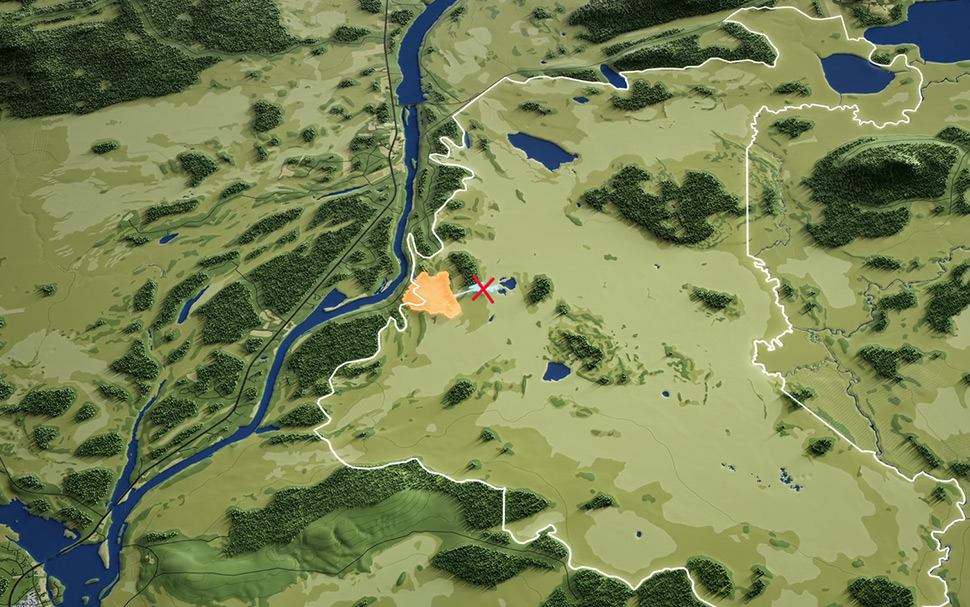
The decision to exclude the separate north-eastern (NE) mineralisation from the project plan is a key measure for mitigating impacts on nature in the Sakatti Project.
Impacts Are Assessed in Accordance with the Precautionary Principle
The natural environment, surface waters and groundwater within the project area have been monitored since 2009. Groundwater level fluctuations have been studied using 130 monitoring points and extensive regional measurement data. This work has produced a comprehensive understanding of groundwater conditions in the study area, annual groundwater level variations, and the potential impacts of different hydraulic conductivity and climate scenarios.
This extensive baseline dataset serves as the foundation for assessing the mine’s potential future impacts on groundwater. The collected monitoring data has been used in mine planning, enabling the estimated groundwater impact areas to be reduced compared with earlier assessments.
The Natura assessment completed in February 2025 was also prepared in accordance with the precautionary principle, taking uncertainties into account. Under this principle, environmental impact assessments are based on the more conservative scenario, and where there is uncertainty, impacts are treated as likely and potentially more significant than estimated when making project-related decisions.
In the Natura assessment, the threshold for adverse effect on the Natura area's conservation values has been set very low. The assessment uses only a two-level scale: adverse effect or no adverse effect.
No Surface Facilities Will Be Located in the Protected Area
The high-grade polymetallic Sakatti deposit is located at a depth of 250–1,250 metres. The surface of the protected area will remain untouched, with no surface facilities or operations located within the area.
Ore extracted from deep underground will be transported for processing outside the protected area through an underground decline tunnel extending more than five kilometres. The tunnels will be sealed as effectively as possible, minimising water inflows into the underground mine. Similar solutions have been used in Finland, for example in major transport infrastructure projects.
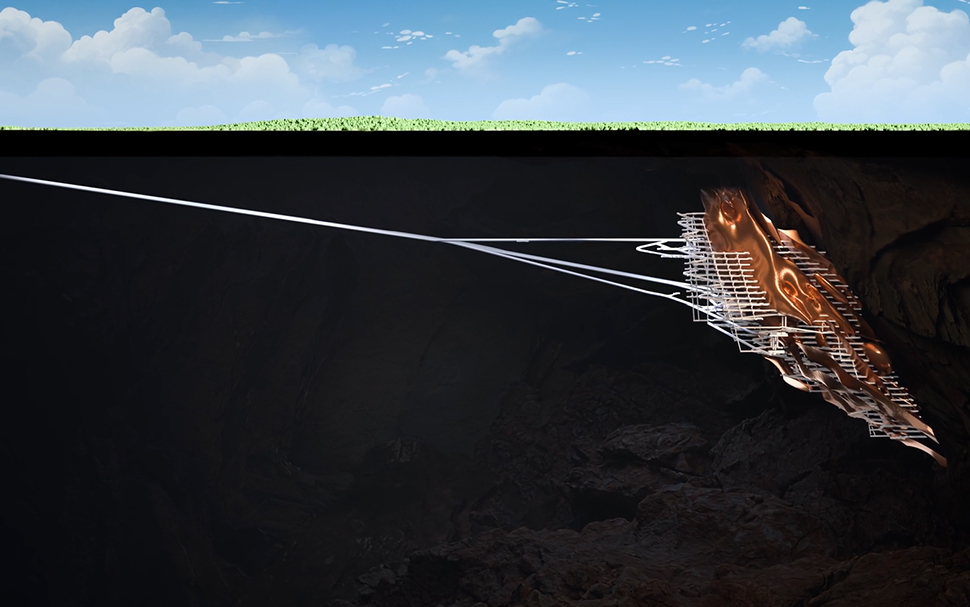
The Sakatti deposit, located at a depth of 250–1,250 metres, will be accessed through a tunnel more than five kilometres long.
Energy Efficiency Improved Through Optimised Processes and Transportation
The Sakatti mine is being designed in accordance with Anglo American’s FutureSmart Mining™ approach, using modern technology and digitalisation to reduce environmental impacts throughout the value chain.
Real-time process monitoring and optimisation will be enabled through automation. The operation will utilise tools such as AI-assisted reporting and process control.
Automation will also allow continuous monitoring and adjustment of emissions and air quality. Energy consumption will be optimised in areas such as crushing and ventilation, while fully and partially autonomous vehicles will be operated remotely.
The mine will make extensive use of electrified systems. For example, ore will be transported primarily using electric vehicles and conveyors. Electric-powered machinery and equipment consume less energy and therefore generate fewer emissions. They also avoid the air quality impacts and noise associated with machinery powered by fossil fuels.
Environmental Impacts at the Concentrator Area Carefully Considered
Mining inevitably generates dust. At Sakatti, dust-generating activities will be located outside the Natura area at the Kuusivaara concentrator area. Dust will arise from the quarry supplying construction aggregates, mining waste handling and traffic, and will be managed through site planning and road watering.
Noise will be controlled through technical structures and solutions. Light pollution will be reduced through smart targeted lighting. Building heights have also been designed to minimise visual impacts on the landscape.
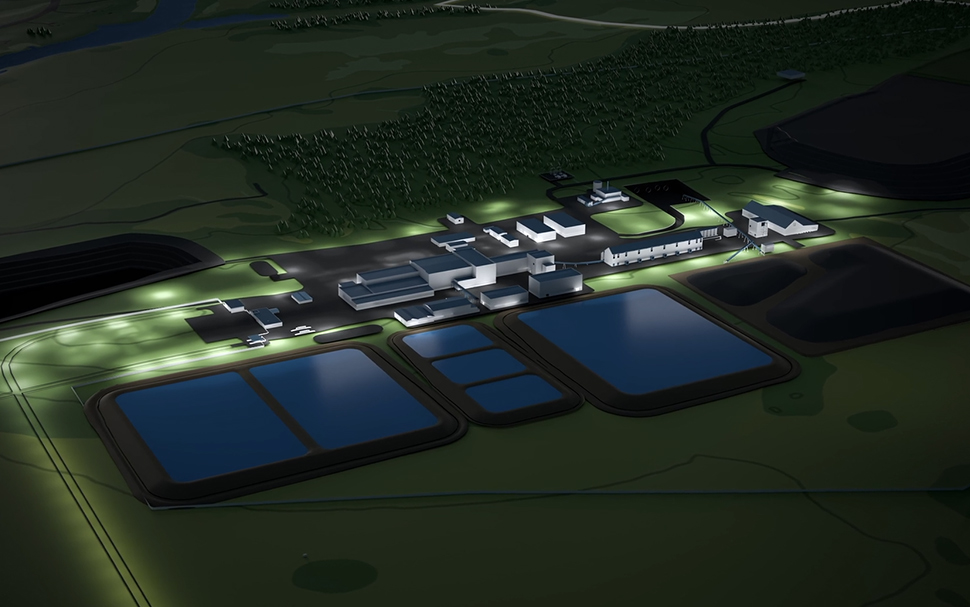
Light pollution at the concentrator area can be reduced through measures such as targeted lighting equipped with timers and motion sensors.
A key aspect of minimising the Sakatti mine’s environmental impacts is reducing and utilising mining waste, implementing efficient water management and water recycling, and maintaining a low-carbon approach. These principles have been incorporated into the design of both the underground mine and the concentrator area. More information on these solutions will be presented in a forthcoming article on our website.
Upon Completion of Mining Activities, the Area Will Be Restored as Nearly as Possible to its Sriginal State
Once operations cease, the concentration area will be fenced off, structures will be dismantled, and access to underground tunnels will be prevented. The phased closure of the filtered tailings storage area will begin during operations, and after closure the area will be made safe for both the environment and future land users.
Close cooperation with the municipality and stakeholders will continue throughout the transition phase to manage societal impacts. After mine closure, the site will be monitored to ensure that no unexpected emissions occur.
Monitoring of the project’s water impact area will also continue. Groundwater levels, habitat types and species will be observed to track the natural recovery of the environment towards its original condition and to enable corrective actions if changes are detected.
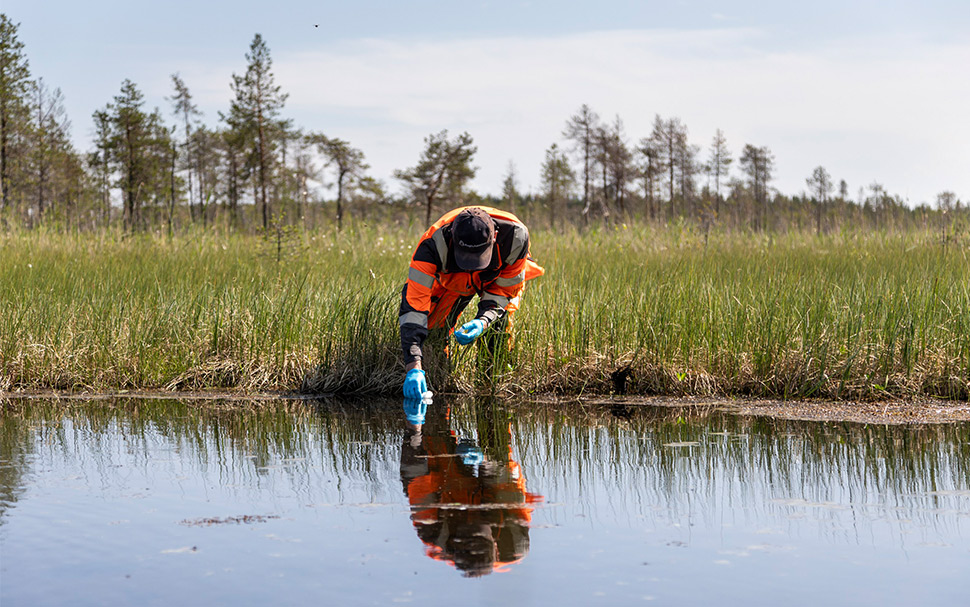
The condition of the environment surrounding the project area will continue to be monitored after mining operations have ended.
Read more on our website:
https://finland.angloamerican.com/en/sustainability/environment