



Working Toward Shared Goals Through Well-Executed Stakeholder Engagement
05 March, 2026
Local acceptance and effective stakeholder engagement are critical for the development of the Sakatti Project. Cooperation is important throughout the entire life cycle of the project.
The Sakatti Project has emphasized openness and transparency from the very beginning. The company actively organizes stakeholder events and seeks various channels for dialogue and feedback. All feedback from the community – especially the key questions and concerns raised – helps improve the design of future operations.
A Continuous Interactive Approach
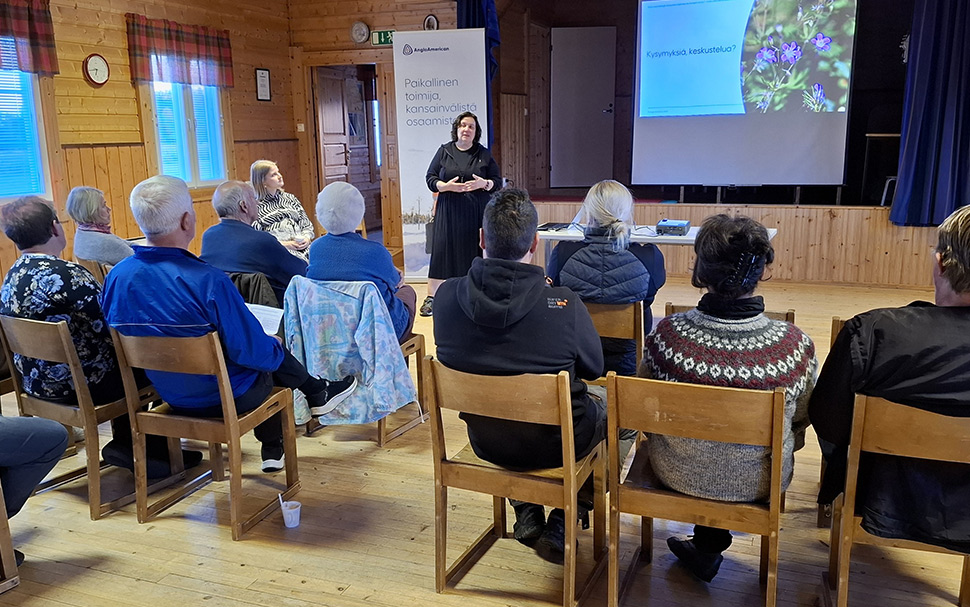
Although legally mandated hearing phases are part of several permitting processes, they do not remove the need for continuous engagement. Meetings at the beginning and at the end of drilling seasons as well as other information events cover current topics and gather feedback. Whenever possible, events are organized in nearby villages to make participation easy for residents. Remote participation options are also provided for those unable to attend in person, including authorities and other interested parties.
According to Ulla Syrjälä, Principal S&SD, “We consider it important that our stakeholders, such as residents of nearby villages and local entrepreneurs, have the opportunity to receive information about our operations face-to-face and regularly. Informal discussions make it easier for people to ask questions and receive information. Often, the most insightful discussions happen after the official program ends.”
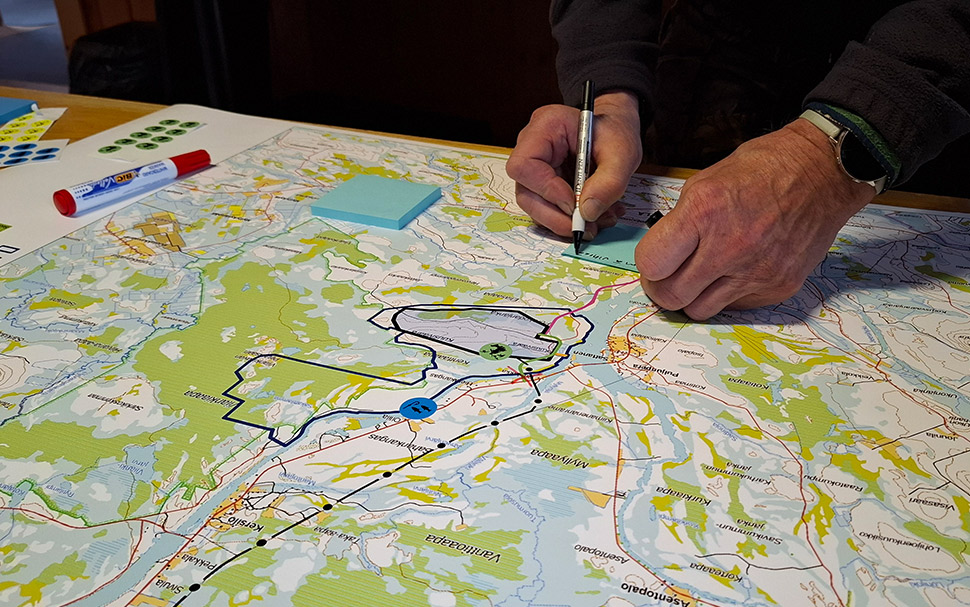
Small‑group discussions have also enriched dialogue. In the workshops, arranged in spring 2025, residents identified berry picking, hunting opportunities, and outdoor recreation as important ecosystem services. In smaller groups, participants explored how the company could compensate for impacts on these values in their home villages and nearby areas.
”Instead of offering ready‑made solutions, we have asked residents to describe what matters to them and then jointly consider suitable compensation measures”, says Syrjälä.
Read more: Compensation of ecosystem services as part of the ecological compensation of the Sakatti Project
Opportunities to take part in Project Planning
Not all goals can always be aligned, but cooperation can benefit both sides.
Concerns about water quality have been taken seriously, and water treatment has been a priority from the start. For example, the removal of xanthates has been incorporated into the water treatment process. The discharge pipeline location has been moved further south to avoid affecting the ice cover and snowmobile routes. Planning has also aimed to minimize impacts on reindeer grazing, and discussions about relocating separation fences have been constructive. Noise mitigation for sensitive areas has also been considered.
“We aim to present permit application content to stakeholders before submission, allowing room for discussion. Presenting major permit processes early also generates ideas for further planning”, says Syrjälä.
A shared interest in mining-related matters
In addition to the Sakatti Project, Sodankylä currently has one operating mine and one additional mining project, along with several companies undertaking exploration. This means residents face frequent participation demands from multiple operators.
As Jonna Penttinen, stakeholder coordinator of the Sakatti Project, notes, ”Residents are required to be active in responding to multiple different parties. For example, within the area of a single reindeer herding cooperative, several mining or exploration companies may have operations underway at the same time. Companies should therefore cooperate more to reduce this burden.”
Many mining‑related issues are shared locally - for example, the discharge of treated waters into the Kitinen River and the resulting environmental impacts. Cumulative effects also arise from traffic in the Northern part of Sodankylä, where both the Sakatti project area and the Kevitsa mine are located.
”We participate jointly with other operators in events where mining‑related topics can be discussed openly and collectively”, Penttinen says.
Since 2016, the perceived impacts of mining in Sodankylä have been studied through a long‑term survey conducted by the University of Lapland and funded by local mining companies. The information offered by the survey supports the municipality’s mining program.
Surveys examine perceived impacts on services, atmosphere, company and authority performance, and environmental effects. The biennial survey is used to gather information on whether residents’ perceptions of the impacts of the mining sector have changed over time.
Most respondents view the Sakatti Project positively – as long as operations are responsible and environmentally respectful. According to the most recent survey, the activities of the Sakatti Project were viewed more positively than in the previous assessment, particularly in terms of cooperation and interaction.
Local Decision‑Making and Cooperation with the Municipality provide the foundation for achieving shared goals
Local acceptance has always been a prerequisite for the Sakatti Project in Sodankylä. Municipal decision‑making also plays a key role in enabling progress.
The draft regional phase plan for the project has been through authority review. The draft plan will go out to public hearing in March–April. After approval, planning continues at the municipal level, where routes, infrastructure, landscape, and cultural environment solutions are defined in more detail.
Cooperation with the municipality has strengthened significantly over the past year. In June, the municipal board approved a Letter of Intent outlining cooperation practices. The related Founding Document was signed in January 2026, and the establishment of a cooperation group was initiated to support the municipality’s strategic goals - housing, education, vitality, and the regional mining cluster.
”The planning of the new cooperation group has gotten off to an excellent start”, says Penttinen. She sees great potential in the group to enhance joint efforts and dialogue with local residents.
Stakeholder Engagement as Part of the Permitting Processes
The project has already completed the Environmental Impact Assessment (EIA) and the related Natura Assessment. The EIA included a stakeholder mapping that identified key groups and established the foundation for engagement. As Syrjälä notes, it is important to monitor how well stakeholder cooperation functions and to communicate how the commitments made during the EIA are being fulfilled.
The final public hearing process of Sakatti Project’s regional land use plan is ongoing. This work is being carried out by the Regional Council of Lapland in its role as the regional planning authority. A Natura derogation permit will also be required and is expected to be submitted to the Finnish Government in 2026. Applying for the environmental permit is another key task this year.
The company plans to organize not only the annual winter fieldwork information events but also discussions related to major permit phases. Information about the events will be provided through our communication channels.
Toward Stakeholder Cooperation That Meets Stakeholder Expectations
Anglo American aims to be a leader in responsible mining. The company’s sustainability strategy defines how responsibility should be reflected in environmental management, stakeholder engagement, and governance. Community support is also emphasized in the Social Way framework.
“It’s important to us that our stakeholders feel that the forms of engagement are effective. The company welcomes feedback onengagement methods and communication channels and invites residents to share their expectations for participation opportunities. A survey opened at the end of last year allows stakeholders to evaluate current practices and suggest improvements.” Penttinen says and expresses thanks to those who have responded to the survey so far.
You can respond to the stakeholder engagement questionnaire here (the form in Finnish). Feedback can also be submitted via the project website or by contacting listed representatives (contact information on the same page).